• RSS
  • Delicious
  • Facebook
  • Twitter

About Me

AMIKOM NEWS

ChatBox

Followers

Popular Posts

Thumbnail Recent Post

STMIK AMIKOM

Clustrmap

Category List

Righteous Kill

Lorem ipsum dolor sit amet, consectetuer adipiscing elit. Quisque sed felis. Aliquam sit amet felis. Mauris semper, velit semper laoreet dictum, quam diam dictum urna, nec placerat elit nisl in ...

Quisque sed felis

Lorem ipsum dolor sit amet, consectetuer adipiscing elit. Quisque sed felis. Aliquam sit amet felis. Mauris semper, velit semper laoreet dictum, quam diam dictum urna, nec placerat elit nisl in ...

Etiam augue pede, molestie eget.

Lorem ipsum dolor sit amet, consectetuer adipiscing elit. Quisque sed felis. Aliquam sit amet felis. Mauris semper, velit semper laoreet dictum, quam diam dictum urna, nec placerat elit nisl in ...

Hellgate is back

Lorem ipsum dolor sit amet, consectetuer adipiscing elit. Quisque sed felis. Aliquam sit amet felis. Mauris semper, velit semper laoreet dictum, quam diam dictum urna, nec placerat elit ...

Post with links

This is the web2feel wordpress theme demo site. You have come here from our home page. Explore the Theme preview and inorder to RETURN to the web2feel home page CLICK ...

Showing posts with label Yamaha. Show all posts

YAMAHA XEON INDONESIA 2010 | YAMAHA XEON 125 CC PICTURE

Berkat teknologi balap yang diusung Xeon, Yamaha mengklaim Xeon merupakan matik yang paling tercepat di kelasnya.
Hal tersebut disampaikan Presdir PT Yamaha Motor Kencana Indonesia Dyonisius Beti dalam peluncuran motor Xeon di X2, Plaza Senayan, Jakarta, Jumat (30/4/2010).
Menurut Dyon, YAMAHA XEON bisa menjadi matik tercepat karena penerapan teknologi yang beda dibanding motor matik sebelumnya.
“Matik ini berbeda dengan matik Mio sebelumnya, dan ini adalah pelengkap matik Yamaha yang lebih baik dari matik Yamaha lainnya dan juga kompetitor berkat teknologi DiASil Cylinder. Teknologi balap sehingga matik ini tercepat,” ujarnya.
Selain menerapkan teknologi balap yang membuat matik ini cepat, di sisi lain Yamaha juga menuturkan tidak membuat motor jadi boros BBM. YAMAHA XEON 125 CC hemat dalam mengkonsumsi bahan bakar
HARGA YAMAHA XEON INDONESIA yang dibanderol Rp 15,5 juta ini mengaplikasikan beberapa fitur balap pada motor matiknya.
Dyon menuturkan Xeon mengusung teknologi yang diaplikasikan pada motor balap yakni teknologi DiASil Cylinder. Tipe cylinder ini memiliki daya tahan yang kuat terhadap aus/gesekan serta sangat mudah dalam melepas panas sehingga umur pakainya menjadi lebih lama (awet).
Selain itu ada fitur Throttle Position Sensor (TPS) pada karburator. Karbu yang dilengkapi dengan TPS menghasilkan waktu pengapian yang ideal sehingga menghasilkan pembakaran lebih sempurna, dan konsumsi bahan bakar menjadi lebih efisien. Juga auto choke untuk memudahkan saat menghidupkan mesin dalam kondisi dingin atau di pagi hari.
yamaha-xeon

HARGA DAN SPESIFIKASI LENGKAP YAMAHA XEON 125 CC

             Jenis
Volume Silinder
Jumlah / Posisi Silinder
Diameter x Langkah
Perbandingan Kompresi
Pelumasan
Sistem Bahan Bakar
Sistem Pengapian
Battery
Busi
Sistem Starter
Kapasitas Tangki
Transmisi
Tipe Kopling
Daya Maksimum
Torsi Maksimum
             4 Langkah, SOHC, Berpendingin Cairan
124 cc
Cylinder Tunggal / Mendatar
52,4 x 57,9 mm
10,9 : 1
Basah
MIKUNI BS 26 x 1
DC C.D.I
12V, 3.5Ah / YTZ5S
C6HSA (NGK) / U20FS-U (DENSO)
Electric & Kick Starter
4,1 Liter
CVT Otomatis
Kering, Kopling Sentrifugal
8,05 kW / 8500 rpm
10,1 Nm / 7000 rpm

HARGA YAMAHA XEON 125 CC : sekitar Rp. 15.5 Juta
sumber : oto.detik

New ScorpioZ 2012


Yamaha Scorpio Z 2012 | Spesifikasi Mesin


Yamaha Scorpio Z 2012 | Spesifikasi Mesin - Rasakan keistimewaan yamaha motor sport Scorpio Z dengan kapasitas mesin 225cc yang tentunya memiliki tenaga super kuat nyaman dan kencang dijalanan metropolis maupun untuk anda yang suka berpetualang ke luar kota. Dengan Teknologi mesin yang besar terkini di yamaha, body yang besar membuat yamaha scorpio memberi kenyamanan dan tenang dalam kondisi kencang maupun pelan di jalan. Yamaha Scorpio Z 2012 memiliki pilihan warna yang menarik, eye catching dan semakin terlihat garang tentunya. Selain itu spesifikasi mesin dan warna yang komplit semakin melengkapi ketangguhan dan keanggunan motor sport Yamaha Scorpio Z ini.


Berikut ini adalah spesifikasi mesin Yahama Scorpio Z

Tipe Mesin  : 4 Langkah, 2 Valve SOHC, Berpendingin Udara

Jumlah / Posisi Silinder  :  Cylinder Tunggal / Tegak

Volume Silinder  : 223 cc

Diameter x Langkah  : 70,0 x 58,0 mm

Perbandingan Kompresi  : 9,5 : 1

Daya Maksimum  : 13,4 kW / 8000 rpm

Torsi Maksimum : 17,5 Nm / 6500 rpm

Sistem Starter  : Electric Starter dan Kick Starter

Sistem Pelumasan : Basah

Kapasitas Oli Mesin  : Total : 1,4 Liter / Penggantian Berkala : 1,2 Liter

Sistim Bahan Bakar  : Karburator BS30 x 1

Tipe Kopling  : Basah, Kopling Manual, Multiplat

Tipe Transmisi : Return, 5 Kecepatan

Pola Pengoperasian Transmisi  : 1 - N - 2 - 3 - 4 - 5

Itulah spesifikasi mesin dari Yamaha Scorpio Z, mungkin dengan anda mengetahui mesin dan spesifikasinya akan membuat anda semakin cinta pada produk Yamaha motor sport ini. Scorpio Z ini dipasarkan pada kisaran harga 24 juta Rupiah.

sumber: infoting

New Yamaha Mio J dan Mio Fino 2012
 
Yamaha Mio J, skutik fuel injection.
Yamaha Mio J berbeda dengan skutik andalan yang lain. Hal ini karena andalan baru Yamaha ini sudah menggunakan teknologi mesin terkini, fuel injection (FI). Yamaha menyebutnya dengan nama Yamaha Mixture JET-Fuel Injection alias YMJET-FI yang membuat Yamaha Mio j begitu sempurna.
Si doi menggunakan mesin 4-langkah, 2 valve, SOHC berkapasitas 113cc dengan kipas sebagai pendingin. Mesin Yamaha Mio J bisa menghasilkan tenaga sampai 7,75 PS pada putaran 8.500rpm dengan puncak torsi hingga 8,5 Nm pada putara 5.000rpm.
Yamaha Mio J
Yamaha Indonesia Mulai Pamerkan Yamah Mio J
Dengan pengaplikasian mesin juara Yamaha, Forged Piston dan Diasil Cylinder membuat jantung pacu semakin tangguh. Penyatuan mesin dipadu dengan teknologi mutakhir YMJET-FI membuat performa Mio J secepat jet dengan konsumsi bahan bakar 30% lebih irit.

Fitur-fitur dan harga Yamaha Mio J
Fitur-fitur Mio J standart Yamaha semakin membuat nyaman pengendara. Jok yang luas dan lebih panjang, lampu sein mengkilat tajam, bagasi luas dan speedometer keren. Tersedia beberapa pilihan warna sesuai selera konsumen, yaitu hitam, biru, putih dan merah.

Keterangan dari Yamaha Indonesia Motor Manufacturing (YIMM), Yamaha Mio J akan dilepas kepasar Pebruari mendatang pada kisaran harga 13 jutaan. Dengan target penjualan bertahap 25 ribu hingga 50 ribu per bulan.

Yamaha Mio Fino, skutik retro modern ala Yamaha
Hampir mirip dengan Yamaha Mio J, Yamah Mio Fino menggunakan mesin 4-langkah, 2 valve, SOHC dengan kapasitas 113cc dan kipas sebagai pendinginnya. Mesin ini bisa menghasilkan tenaga sampai 8,35 PS pada putaran 8.000 rpm dengan torsi puncak 7,84 Nm pada 7.000 rpm.
Perbedaan yang sangat mencolok tentu pada tampilan fisiknya. Yamaha Mio Fino menggunakan desain dengan konsep retro modern. Tersedia berbagai 3 pilihan tema sesuai selera Finoers dengan 7 pilihan warna segar.
Yamaha Mio Fino
Yamaha Mio Fino, Retro modern ala Yamaha
Yaitu Yamaha Mio Fino Sporty, Yamaha Mio Fino Fashion dan Yamaha Mio Fino Classic. Tersedia warna Fashion Cyan, Classic Red, Fashion Pink, Classic Black, Sport Blue, Sport Black, dan Sport Red.
Harga yang ditawarkan YIMM untuk andalan keduanya ini berada pada harga Rp 13,5 jt untuk Sporty dan Fashion sedangkan untuk yang Classic dilepaskan pada harga Rp 13,5 jt. Yamaha Mio Fino mulai dipasarkan pada tanggal 2 Pebruari 2012 dengan target penjualan 20 ribu unit.

sumber : http://autos.okezone.com/

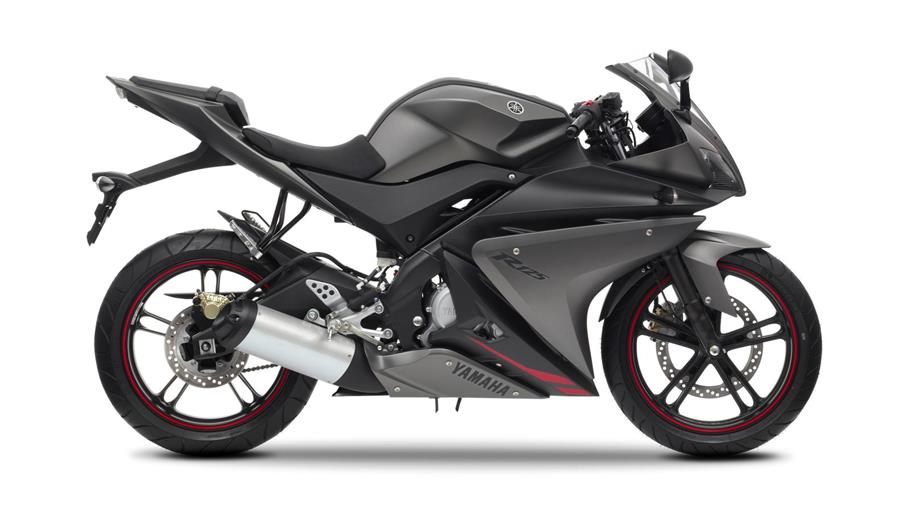
 2012 Yamaha 125CC : The All-Round Experience

At Yamaha we believe you get out what you put in. With over half a century of motorcycle innovation, that means some pretty special machines. The 125cc range embodies freedom, fun and fulfilment – each model is built with the passion that comes from decades of competing and winning at the highest level.
Forging new technology and bringing it to the road is what Yamaha is all about. Our 125s don't just look the business, they do the business – covering every need, from simple economy to custom luxury.
The YZF-R125 also has real racing pedigree, featuring the agressive styling of the R6 and R1 as well as a MotoGP inspired mid-ship exhaust.

Liquid-cooled 4-stroke single-cylinder 125cc engine

The YZF-R125’s advanced engine combines a 4-valve cylinder head and fuel-injection for the best possible performance. The short stroke layout gives the engine a free-revving character, which when connected to the 6-speed gearbox, delivers lively acceleration.

R-series style bodywork

With R-series style front cowling and twin fox-eye headlights, the YZF-R125 has the same aggressive supersport styling as the R1 and R6. Unlike many 125cc bikes, the R125 is built on a full-sized chassis providing a more comfortable riding position – especially for taller riders.

Large diameter disc brakes

Yamaha is committed to using high-specification components – like the large diameter 292mm front disc brake units on the YZF-R125. The compact twin-pot caliper design on the front-brake combined with the 230mm rear disc ensures smooth, controlled braking at a range of speeds and assured stopping power when you need it.

Sporty mid-ship muffler

The mid-ship exhaust muffler contributes to centralise the bike’s mass for balanced handling, and houses dual catalysers for cleaner emissions. In addition, an Air Induction System introduces air into the exhaust for more complete combustion of exhaust gases, lowering emissions even further.

Instrument panel

The combined digital and analogue panel speedometer provides a clear view of all the bike’s vital functions at a glance.

Aluminium swinging arm

The R125 features a lightweight Deltabox frame which delivers an optimum balance of strength and rigidity for class-leading handling performance. Complementing the frame is a lightweight cast aluminium swinging arm that allows the link-type rear suspension system to operate more efficiently and deliver more responsive handling qualities.

2012 Yamaha YZF-R1 First Ride

When Yamaha first introduced its fly-by-wire throttle system called YCC-T (Yamaha Chip Controlled Throttle) in 2006 on the YZF-R6 and then a year later on the R1, many wondered if the system was a precursor to traction control on Team Blue’s Superbike. As the years rolled on it looked like Yamaha was more than satisfied with the power delivery of the R1, and to be honest we were too once the crossplane crankshaft engine design was put into production. The connection between the rider’s right wrist and the rear tire on the crossplane crankshaft equipped sportbike has been almost telepathic. It almost seemed that traction control would be redundant with so much throttle control available. Now for 2012, Yamaha has equipped the R1 with traction control. Is it a gimmick to keep the R1 at the top of the sales for sportbikes in 2012, or will it make a better streetbike and racer?

To find out, we were invited out to a Southern California desert hotspot known as Indian Wells to spend two days riding the 2012 YZF-R1 on the street and track. One day would take us up a section of the twisted Palms to Pines Scenic Byway and back in near triple digit heat. For the second and more anticipated day, we would move to the always popular Chuckwalla Valley Raceway. Both days would give us plenty of time and varied situations to play with the latest electronic wizardry from Yamaha.


The 50th Anniversary R1 in classic Yamaha racing livery is  14 490. Only 2000 are available worldwide.
The top triple clamp on the 2012 Yamaha YZF-R1 has been restyled but is purely cosmetic.The Tech

The list of changes to the 2012 YZF-R1 can be counted on one hand, but just one of those five changes is enough to get our attention. The all new 7-position traction control system is derived from seasons of competition in MotoGP with the YZF-M1. Utilizing wheel speed sensors and a new ECU, the TC system first detects wheel spin by calculation the difference between the rotational speed of the front and rear wheel. Once slip is detected the ECU adjusts the YCC-T, fuel injection and ignition to optimize wheel spin and forward drive. Yamaha claims that the the system will detect a loss of traction before the rider can and find the best combination of throttle opening, fuel delivery and ignition to create a very smooth and seamless power management solution. By varying the throttle opening, the system avoids a jerky or harsh feel when the power needs to be managed. The math is complicated but the system is fairly straightforward.

The seven positions of the traction control system are six increasing levels of intervention and the option to turn it off completely are controlled via a switch on the left clip-on. On the fly changes only require a closed throttle, but to turn the system off the bike must be at a stop. A bar graph at the top right of the LCD dash indicates what level is selected and a yellow light flashes when the TC kicks in. Combining those seven choices with the three levels of the D-Mode power selection gives the rider 21 settings to fine tune the ride.

Other changes to the R1 include a progressive rear shock spring that is stiffer at the first part of the stroke to improve rear traction. The end of the stroke is softer to smooth out the bumps on the freeway and rough roads. All other suspension settings have remained the same. The only other change to the suspension system is a restyled top triple clamp that is purely cosmetic.

Subtle styling changes to the front and rear round out the changes for the 2012 R1. Yamaha calls the changes to the face of the R1 new and modernized, but I would say that they are very minimal. The cowling openings have been slightly reshaped and the position lights at the outside corners are now LED units mated with a reflector that runs down the lower portion. In the rear the mufflers get a new heat shield and reshaped end caps.

The 2012 Yamaha YZF-R1 is big fun on the street.The rear suspension on the 2012 Yamaha YZF-R1 has a new shock spring that is stiffer initially and softer and the end of the stroke.The traction control system on the 2012 Yamaha YZF-R1 is more useful on the track than the street..The Street

Swinging a leg over the Yamaha, I was instantly reminded that the R1 is on the big size for the recent crop of superbikes. The wide front fairing makes it feel bigger than it is, and a wide seat and tank area further portray the portly feel. But on the street this really isn’t a problem. There is plenty of room to move around and the rider triangle doesn’t require frequent yoga sessions and trips to the chiropractor.

Once on the road I spent the afternoon sampling various traction control levels and modes to to find what works the best on the street, but honestly with the high stakes for failure on the mountainous road I really wasn’t pushing hard enough to cause the TC to kick in. If I put the selector at the highest level of six and really snapped the throttle hard while exiting the turns I could get the yellow light to flicker to signal I was in fact using the TC, but the exercise was so far out of my riding style I felt like an outright squid. I decided to save the TC testing for the track.

The suspension is well suited for the rigors of canyon carving and mountain shredding but was also a winner when the road straightened out and the bumps were plenty. The softer spring rate at the end of the stroke definitely smoothed the ride out, but the stiffness in the initial travel had me feeling every repaired crack and seam in the turns. Backing down the compression a bit would most likely remedy part of the stiffness, but our time on the street was limited and didn’t allow for adjustments. Overall though the stiffness increased the rear end feel in the corners, but maybe a bit too much. It’s always a trade-off with a bike that is meant to perform at such a high level on the track and be usable on the street, and the taut feel in the corners is a fair trade for the smoothness on the bumpy roads.

The only real gripe that I have about the R1 on the street is the heat. Granted the ambient temperature was approaching 100-degrees, but the amount of heat coming from the under-tail exhaust can make the back of your legs toasty if not uncomfortable.

The R1 makes a great street mount with its comfortable riding position and user-friendly power delivery. If I were to have my pick of a sportbike for a day or more of street riding the Yamaha would be at the top of my list.

The Track

Chuckwalla Valley Raceway is a gem in the desolate wasteland known as Desert Center and is one of our favorite tracks. The fairly high-speed track requires commitment and confidence to master its 17-turn, 2.7-mile long ribbon of black dropped in the sandy desert. As a second-string track rider in the MotoUSA team, I would need all the help I could get to not look a fool.

Seven levels of traction control combined with three D-Mode levels give the rider 21 power and traction settings on the 2012 Yamaha YZF-R1The 2012 Yamaha YZF-R1 is stable and confidence inspiring but requires extra effort to move it around.The traction control system on the 2012 Yamaha YZF-R1 can detect wheelspin before the rider can.As the reigning American Superbike champion, the Yamaha R1 has an excellent pedigree, and the Tuning Fork Company attributes the uneven firing order, crossplane crankshaft engine design to the the success of it’s AMA, British and World Superbike effort and well as its MotoGP victories. The engine design puts forth a mid-range grunt that spans the gap between the low-end punch of a Twin and the top-end rev of a standard Inline Four. Twisting the throttle produces one of the sweetest exhaust notes to come from igniting air and fuel while laying down supremely controllable rear wheel traction. Now with traction control the delivery has gotten even better, dare I say foolproof.

With the the excellent throttle to rear tire relationship of the R1, getting up to speed and trusting the rear end grip was easy even without traction control. I spent the first session alternating between level one and six. My skill set wouldn’t cause the traction control to do its thing until level five in the first two sessions, but it was good to get the feel of the system in action. The system works so seamlessly that the only real indication that it is functioning is the yellow light on the dash blinking.

As my pace picked up in later stints, I began to trust the system and started to open the throttle earlier and quicker while exiting corners. The yellow light flashed more often, even as I dialed the system to level four. Eventually, I settled on level three as the optimum setting for me as it only went to work in the corners where I felt supremely confident in my abilities. It is really impressive how little you notice the TC rolling back the power until you stand the bike up and sling shot out of the corner like you were held back by a rubber band. Not once did I experience any jerky or unwanted cutting of power. Really impressive, and better than I had expected.

The chassis of the R1 makes for a rock-solid, stable ride on the track, but it can feel a bit heavy in some of the slower turns. Turn-in effort required a deliberate force, but the result was always sure footed. Mid-corner stability was a bit unsettled in the faster, bumpier corners, but slowing the rear rebound two clicks sorted the problem. Once the change was made, railing the cornering and nailing the exit became easy as pie. On the brakes, the R1 was docile and settled with just a hint of squirm that let you know the rear end was light. Hard braking later into a 20-minute session revealed a slightly wooden feel to the brakes, but the power was still strong as the first lap.

The traction control system on the 2012 Yamaha YZF-R1 uses wheel sensors to detect slip and then adjusts the power accordingly.  The Verdict

The Yamaha YZF-R1 was already one of the easiest 1000cc sportbikes to ride thanks to its solid chassis and easy to control powerplant. Before riding the 2012 model we questioned if the R1 really even needed traction control, and our opinion was not really. However, after turning more laps in one day that I have in five years on the track, without a doubt the addition of traction control has improved the R1’s power delivery. The system does exactly what Yamaha intended and promised, allowing me to get on the gas sooner, harder and with more control than ever before. And that has in turn elevated my track and street game from second-string to a position on the starting line-up. That right there is all the proof I need to show that TC on the 2012 Yamaha R1 is a good thing.

Key Features

The 2012 Yamaha YZF-R1’s traction control system can aid in reducing tire wear because of less wheel spin. Combined with three-level D-Mode electronics throttle response control, riders have 21 different choices offered for tailoring to their riding preference. The World GP 50th Anniversary Edition celebrates company’s racing heritage with Rapid Red/Pearl White Livery. Gold Yamaha badges are used on rear, fuel tank and front of the bike along with extra small sticker kit offered.
The 2012 Yamaha YZF-R1 features a new headlamp cowl designed and engineered for providing more aggressive, sharper and more modern look. The LED position lamps are used for unique and top notch look. The redesigned muffler end caps and heat shields provide a more mechanical look. It keeps all the technical superiorities designed for previous model; the Yamaha Chip Controlled Throttle (YCC-T) is MotoGP inspired fly by wire technology designed for providing instant throttle response, while the Yamaha Chip Controlled Intake (YCC-I) offers optimum fuel/air mixtures for smooth throttle response and maximum power.
2012 Yamaha YZF-R1
In keeping with 2012 Yamaha YZF-R1’s crisp handling and outstanding cornering ability, its aluminium frame has been engineered for providing excellent rigidity balance. The lightweight die-cast Controlled-Fill magnesium rear frame contributes optimum mass centralization. Suspension system includes SOQI front forks that use one of tricks designed for their winning MotoGP motorcycles; independent damping. The right fork handles rebound damping, while left side handles compression damping. The rear shock adopts bottom linkage for optimum suspension characteristics.

New for 2012

The 2012 Yamaha YZF-R1 gets seven-level traction control system, which allows the rider to get more traction and ride while exiting corners. The all new top triple clamps add to appearance of this bike, reminiscent of MotoGP powerhouse YZR-M1. The footrests have also been redesigned for sophisticated rider or motorcycle interface and great boot sole contact. The LED position lamps and new headlamp cowl styling enhance its distinctive styling.
2012 Yamaha YZF-R1

Powertrain

Powering the 2012 Yamaha YZF-R1 is a 998cc liquid cooled four-stroke DOHC 16-valve engine with maximum output of 179.6 horsepower at 12,500 rpm and 115.5 newton meters of torque at 10,000 rpm. The engine is teamed up with six-speed transmission with Transistor Controlled Ignition for superior performance and enhanced power delivery in all conditions. Crossplane crankshaft technology proven in success after success on MotoGP motorcycles offers a high-tech uneven firing interval. As compared to usual inline four-cylinder engine design, where the two inner and two outer pistons move together in pairs with 180-degree intervals, this crossplane crankshaft has each connecting rod 90-degree with exclusive firing order of 270° –180° – 90° – 180°. Rather than combustion torque continues to build, providing the rider more linear throttle response with awesome traction and power out of corners.
2012 Yamaha YZF-R1 engine
For maximizing rider comfort and power output, the 2012 Yamaha YZF-R1’s engine adopts coupling-type balancer, which rotates in opposite direction like the crankshaft. The exhaust system is scrupulously engineered for enhancing powertrain output with its three-way catalyst technology, reducing exhaust emissions. The silencer is single expansion type, and the sound coming through from exclusive crossplane crankshaft equipped powertrain is unlike any other inline-four cylinder engines found on supersport bikes. This fuel-injected engine takes full benefit of Yamaha Chip Controlled Throttle (YCC-T), a MotoGP-inspired fly by wire technology used for delivering instant throttle response. You will also find a Yamaha Chip Controlled Intake (YCC-I), a variable intake system, which broadens spread of power.

Chassis/Suspension

The 2012 Yamaha YZF-R1’s frame gets a combination of uncompromising rigidity where required along with carefully achieved flex for accurate rigidity balance this motorcycle needs to provide the rider the full advantage of its engine and handling characteristics.

Bottom Line

Yamaha uses bottom to work with rest of chassis refinements for providing brilliant, crisp handling characteristics, which the 2012 Yamaha YZF-R1 is known for.
2012 Yamaha YZF-R1


sumber: motorcycle-usa

Yamaha Luncurkan R15 Versi 2.0 Limited Edition

NEW DELHI – Dalam gelaran Delhi Auto Expo yang sedang berlangsung mulai 7 Januari 2012, Yamaha yang merupakan produsen sepeda motor dari Jepang, telah meluncurkan beberapa varian motornya, baik motor bebek, matik maupun motor sportnya.

Namun, yang spesial yakni, Yamaha Motors India telah meluncurkan motor R15 versi 2.0 limited edition yang disiapkan untuk memperingati HUT ke-50 Yamaha Road Racing World Championship Grand Prix. Motor ini hanya diproduksi beberapa unit dan didesain dengan sentuhan warna yang berbeda dengan versi aslinya.

Secara keseluruhan, baik dari bodi hingga mesin, R15 limited edition ini tetap sama dengan versi aslinya. Namun, perbedaan dilakukan Yamaha pada striping dan warnanya. Motor sport ini dipadukan dengan warna yang menarik, yakni putih dan merah. Warna putih lebih mendominasinya.

R15 versi aslinya dibanderol 97.425 rupee atau Rp18 jutaan. Namun, untuk yang limited edition ini masih dirahasiakan. Mengenai dapur pacu, R15 limited edition ini tetap sama dengan versi aslinya, yakni menggunakan mesin 150cc dengan silinder dari bahan alumunium serta berteknologi DiASiI (Die-casting Alumunium Silicon). Diklaim bahan ini dapat memberikan kestabilan suhu pada motor saat melakukan perjalanan jauh.

Selain memamerkan R15 limited edition, Yamaha juga memamerkan beberapa motornya, diantaranya, FZ1, VMax, FZ-S, YBR 125 dan untuk skutiknya seperti Yamaha Mio, Fino, Xeon dan beberapa motor skutik prototype lainnya.

“Yamaha selalu menjadi produsen roda dua yang konsisten dalam permintaan pasar. Setiap mengeluarkan varian baru, selalu mengikuti selera pasar, sehingga semua varian motor Yamaha diterima dengan baik oleh konsumennya. Dalam gelaran ini, kami juga memamerkan beberapa motor terbaru kami dan beberapa motor skutik prorotipe,” tutup Hiroyuki Suzuki, CEO and MD Yamaha India, dalam kutipannya di Motorbeam, Minggu (8/1/2012).

sumber: http://autos.okezone.com/

2012 Yamaha Motorcycle
Besides its sheer speeds at the raceways, the Yamaha YZF-R6 is greatly known for its technological aspects.
The R6 screams tech-savvy in many ways, but is best known for Yamaha Chip Controlled Throttle (YCC-T), the first motorcycle to have one, and Yamaha Chip Controlled Intake (YCC-I). The advanced Yamaha Chip Controlled Throttle provides "flawless response under all conditions," and the Yamaha Chip Controlled Intake varies "intake tract length for excellent cylinder filling and a broader powerband."
And the R6 returns for 2012 with these technical aspects wrapped around its 599cc inline-four featuring titanium valves, although a carry-over model from last year.
The only change for 2012 is a new color option; just like its older brother, the 2012 R1, the 2012 YZF-R6 will be offered in a limited World GP 50th Anniversary Edition that celebrates Yamaha's racing heritage with Pearl White/Rapid Red livery.
The LE R6, which only 1500 will be produced worldwide, includes a 50th Anniversary emblem on top of the fuel tank and a special numbered plate showing the production number.
Following are the highlights, specs, color options and MSRP for the 2012 Yamaha YZF-R6.
2012 Yamaha YZF-R6 Highlights
Engine:
  • Compact, lightweight 67mm x 42.5mm, 599cc DOHC 16-valve, liquid-cooled titanium-valved four-cylinder has a compression ratio of 13.1:1, for great response. Domed pistons with valve cutouts produce a compact combustion chamber.
  • Fuel injection mapping for the YCC-T-Yamaha Chip Controlled Throttle dual-injector system complements the high compression ratio for great throttle response and reduced engine braking.
  • YCC-I-Yamaha Chip Controlled Intake electronically varies intake tract length for a broader powerband.
  • A magnesium subframe removes weight from the rear of the motorcycle for increased mass centralization.
  • YCC-T uses a powerful ECU and multiple sensors to provide perfect, smooth engine response and optimal power whenever the throttle is twisted under all conditions.
  • Twin-injector fuel injection: shower-type injectors above each intake funnel help achieve optimum fuel atomization at high rpm.
  • Slipper-type back torque-limiting clutch greatly facilitates braking and downshifting from high speed. Close-ratio six-speed transmission delivers seamless power and maximum acceleration.
  • GP-style titanium muffler contributes to mass centralization and contains EXUP® for a broad powerband, and 02 sensor for spot-on injection and emissions compliance.
  • Linerless, direct-plated ceramic-composite cylinder bores mean greater heat dissipation for consistent power delivery and reduced friction.
  • Cool magnesium valve and engine covers are light and stylish.
  • Direct-ignition coils, dual-electrode spark plugs and high-output magneto deliver extremely accurate, reliable firing.
Chassis/Suspension:
  • Deltabox aluminum frame incorporates GP thinking in terms of engine positioning and rigidity for the ultimate in 600-class handling.
  • The lightweight swingarm pivots high in the frame, for increased anti-squat effect and mid-corner stability. TZ-type chain adjusters ease rear tire changes.
  • Four-way adjustable (preload, high-speed compression, low-speed compression and rebound damping) inverted fork with 41mm tubes increases freedom in setting up for street or track use; soak up the bumps and resist bottoming when braking.
  • Four-way adjustable (preload, high-speed compression, low-speed compression and rebound damping) piggyback rear shock delivers exceptional rear wheel tracking and stability.
  • Dual 310mm front disc brakes use forged one-piece radial-mount calipers and radial-pump front master cylinder with adjustable lever for astounding braking power and feel.
  • The casting technique for the five-spoke 17-inch wheels makes the rims light and strong, not to mention wickedly cool-looking.
  • Removable rear shock spacer and adjustable fork ride height allows the rider to tailor the ride position for the best fit and comfort.
Additional Features:
  •   Built-in lap timer is controlled by a right handlebar switch.
  •   Multifunction digital and analog instrumentation features: programmable shift light, digital speedometer, analog tachometer, dual tripmeters with miles-on-reserve function, odometer, water temp gauge and lights for neutral, high beam, low fuel and turn signals.
2012 Yamaha YZF-R6 Specs:
ENGINE
  • Type: 599cc liquid-cooled inline 4-cylinder; DOHC, 16 titanium valves
  • Bore x Stroke: 67.0 x 42.5mm
  • Compression Ratio: 13.1:1
  • Fuel Delivery: Fuel Injection with YCC-T and YCC-I
  • Ignition: TCI: Transistor Controlled Ignition
  • Transmission: 6-speed w/multiplate slipper clutch
  • Final Drive: O-ring chain
CHASSIS
  • Suspension / Front: 41mm inverted fork; 4-way adjustable, 4.5-in travel
  • Suspension / Rear: Single shock; 4-way adjustable, 4.7-in travel
  • Brakes / Front: Dual 310mm floating disc; radial-mount 4-piston calipers
  • Brakes / Rear: 220mm disc; single-piston caliper
  • Tires / Front: 120/70-ZR17
  • Tires / Rear: 180/55-ZR17
DIMENSIONS
  • Length: 80.3 in
  • Width: 27.8 in
  • Height: 43.1 in
  • Seat Height: 33.5 in
  • Wheelbase: 54.1 in
  • Rake (Caster Angle): 24°
  • Trail: 3.8 in
  • Oil Capacity (with oil filter change): 2.75 qt
  • Fuel Capacity: 4.5 gal
  • Fuel Economy: 40 mpg
  • Wet Weight: 417 lb
OTHER
  • Primary Reduction Ratio 85/41 (2.073)
  • Secondary Reduction Ratio 45/16 (2.813)
  • Gear Ratio - 1st Gear 31/12 (2.583)
  • Gear Ratio - 2nd Gear 32/16 (2.000)
  • Gear Ratio - 3rd Gear 30/18 (1.667)
  • Gear Ratio - 4th Gear 26/18 (1.444)
  • Gear Ratio - 5th Gear 27/21 (1.286)
  • Gear Ratio - 6th Gear 23/20 (1.150)
  • Warranty 1 Year (Limited Factory Warranty)
2012 Yamaha YZF-R6 Color Options / MSRP:
  • Raven / $10,890
  • Team Yamaha Blue/White / $10,890
  • Pearl White/Candy Red / $11,090
  • World GP 50th Anniversary Edition - Pearl White/Rapid Red / $11,390
Available from October 2011; World GP 50th Anniversary available from January 2012